By FALPC Intern Jacquelyn Burmeister
The word “permaculture” seems to pop up over and over again as we continue discussions on urban sustainability and food justice. The name sounds trendy, but how does permaculture really differ from traditional agriculture? Additionally, how can Worcester benefit from a permaculture garden?
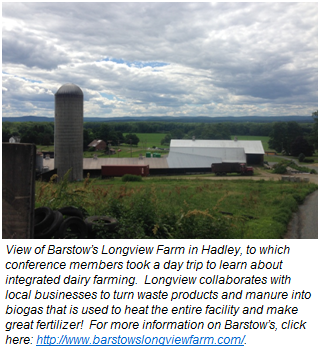
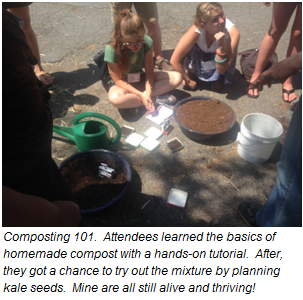
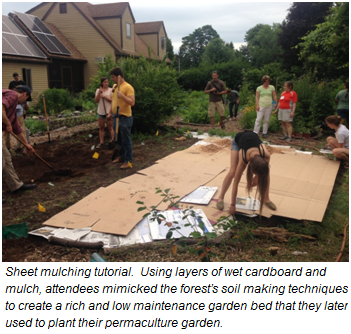
To answer these questions, I decided to attend the Revisioning Sustainability Conference at UMass, Amherst at the end of June. Upon arrival, I learned that UMass’s Permaculture program has been named one of the top university programs that are changing the world for the better. The university has also achieved fame in its dining halls serving healthy, local and award-winningly delicious food. People had come from as far as Hawaii to hear talks on the principles of permaculture, food social justice, composting, and project development, so I knew I must have chosen the right place to get acquainted with the topic.
As trendy as the name sounds, permaculture is not new. It was developed in the late 70’s by two Australians named Bill Mollison and David Holmgren to mean “Permanent Agriculture”. Permaculture essentially applies the principles of ecology to agriculture by appreciating the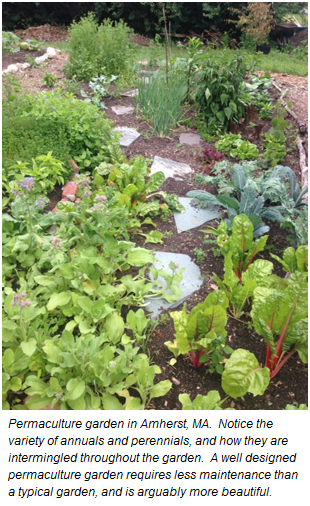 various functions of plants (and bacteria and fungi!) in the cultivation of crops in order to reduce the need for human interaction and waste production, thus providing perpetual yields. In the words of Mollison, who went on to write a textbook on the topic, “Permaculture is a philosophy of working with, rather than against nature; of protracted and thoughtful observation rather than protracted and thoughtless labor; and of looking at plants and animals in all their functions, rather than treating any area as a single product system”.
When Mollison says “working against nature”, he refers to the standard practices of growing food in a way that strains ecosystems. Growing foods in monoculture, or the practice of growing the same crop year after year, leaches the soil of nutrients and makes the crops more vulnerable to pests. This is one of the reasons that farmers need to buy fertilizers and pesticides which further damage the environment. By appreciating that certain plants specialize in replacing these soil nutrients, and that certain plants are natural pesticides, you can rotate plants in a way that can save time and money, while producing a healthier, organic food crop. For instance, while at a permaculture methods workshop, I learned that by planting strawberries and chamomile as ground cover under my fruiting trees, I can effectively keep weeds at bay with minimal weeding and no synthetic herbicides.
Permaculture has been an essential part of UMass Dining’s mission to be more loc
ally sourced. Currently, Amherst has four permaculture gardens, one outside of each dining hall, and one outside of the Chancellor’s home, thus complementing students’ meals with local, organic food. But the goals of the project aren’t just to generate healthy food i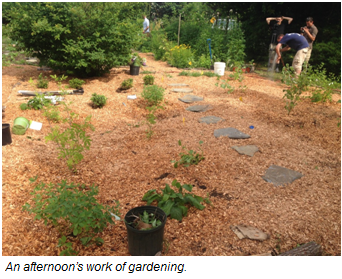 n an environmentally responsible way. Ryan Herb, the Amherst graduate that promoted the project in its earlier years, stresses the importance of the community in the success of the university’s mission. Without the dedicated team, and thousands of volunteers, the project wouldn’t be what it is today.
A garden can bring the community together to share the in unique experience of cultivation. But it doesn’t have to end with the harvest! Participants can later continue to share recipes and food preparation techniques as they enjoy in the organic, local bounty that they have cultivated.
Permaculture is becoming increasingly popular for its potential to be used on a local scale in urban “food deserts”, for its ability to bring healthy foods and recreational activities to people who might otherwise not have access to them. Small, community centered permaculture gardens would not only improve access to healthy foods, but make bring communities together. For this reason, the Worcester Food and Active Living Policy Council is currently pursuing legislation that will make it less difficult to convert unused spaces in Worcester into these types of projects, and allow the owners of these urban farms to sell their food commercially.
For more information on what the Worcester FALPC is doing to promote local food legislation, click here: http://worcesterfoodandactiveliving.org/legislative-priorities/
If you are interested in learning more about Permaculture, check out this website: http://permacultureprinciples.com/
For more information about the 2014 Revisioning Sustainability Conference see: http://www.revisioningsustainability.com/about-umass-permaculture.html
For more information on UMass Dining, follow this link: http://www.umassdining.com/
More Photos From the Conference